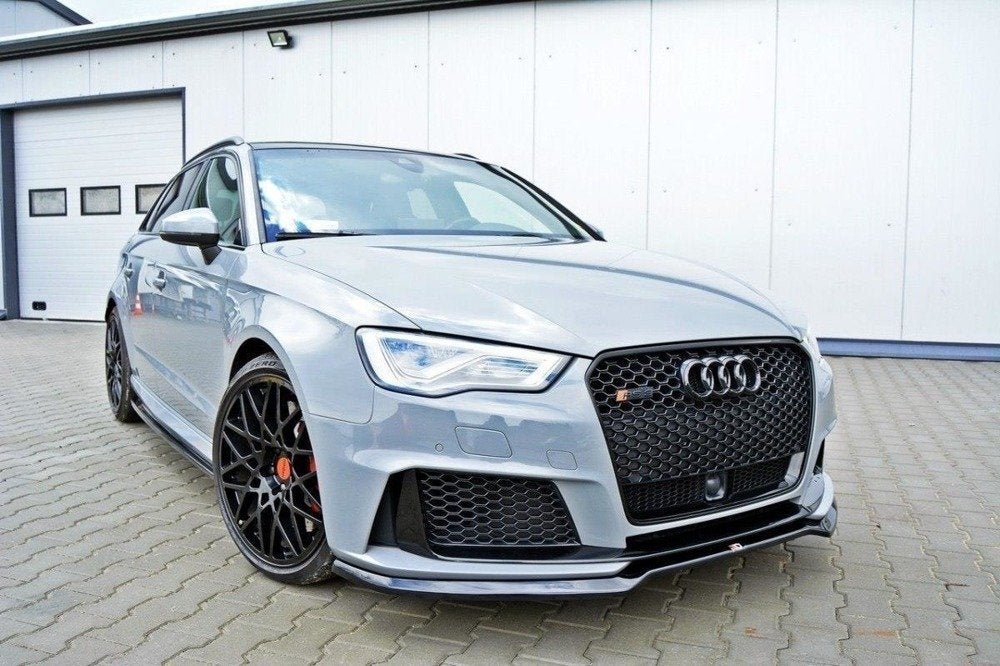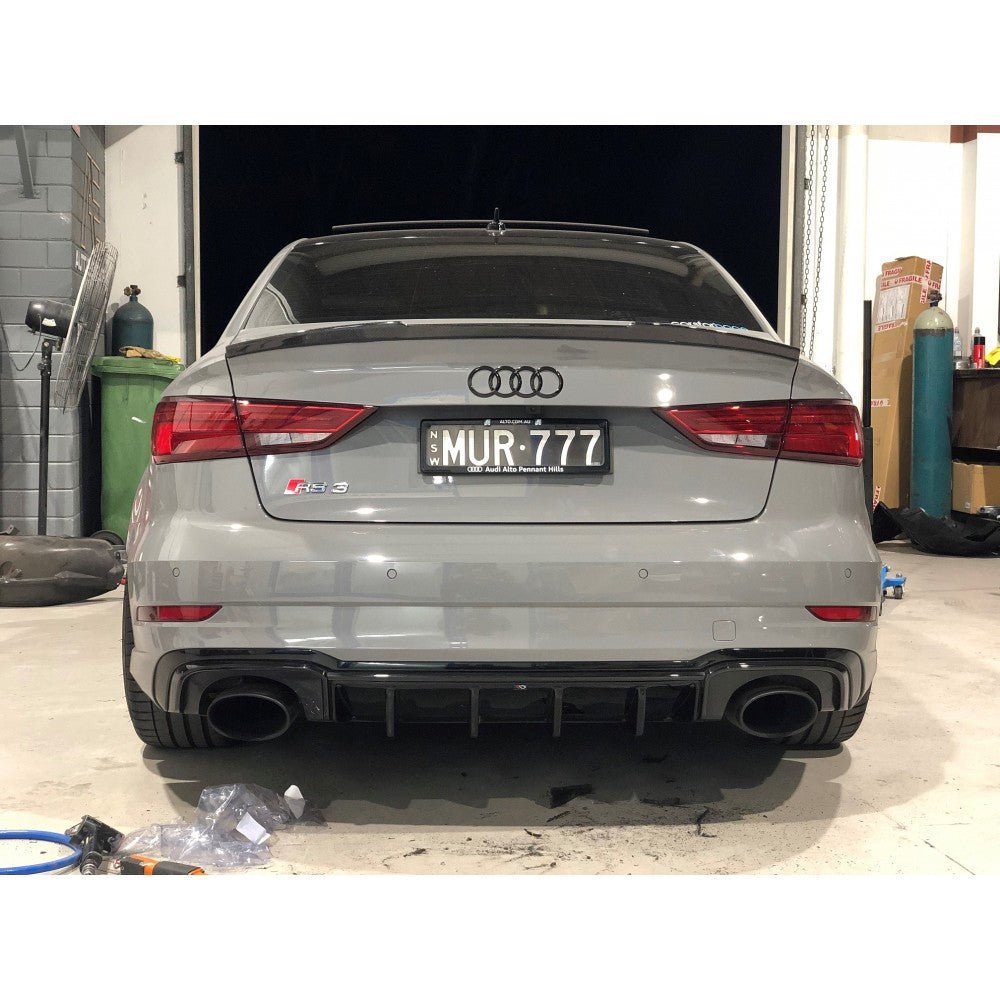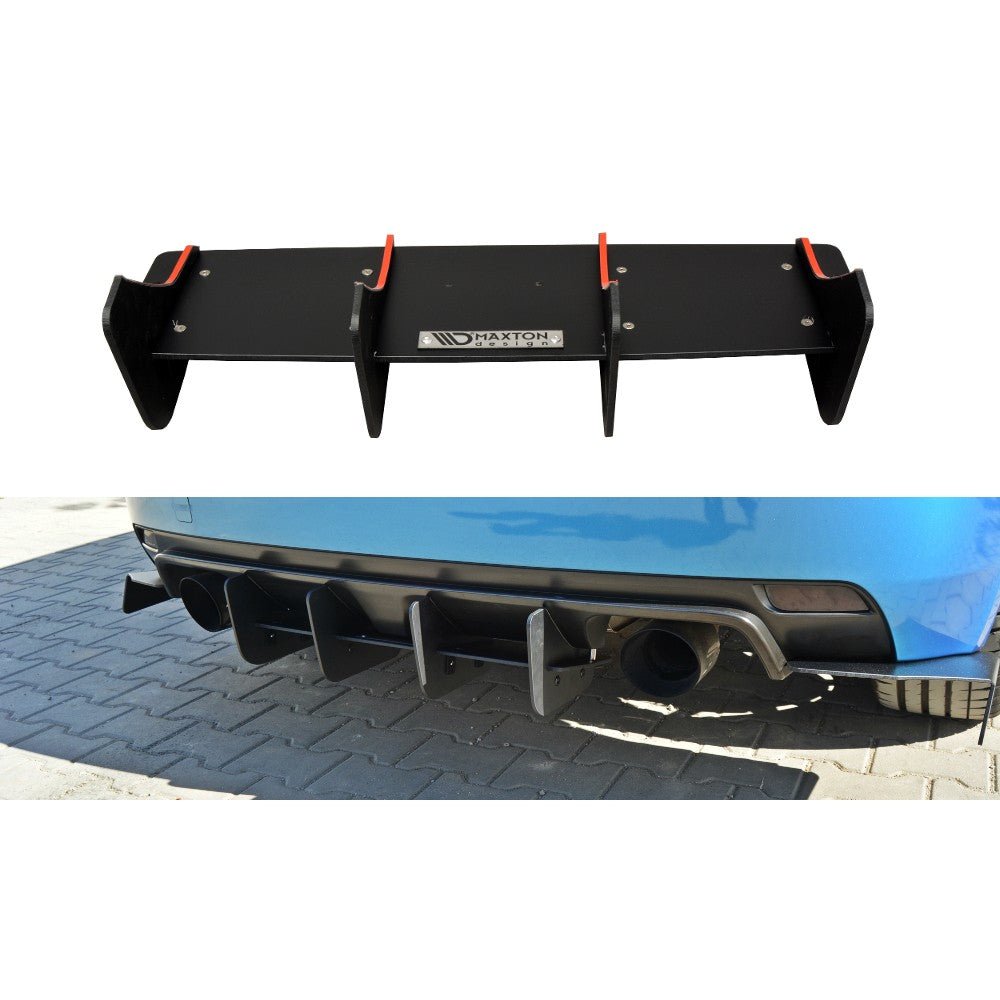
The quickest way to waste four hundred bucks? You search for a body kit compatible with BMW 3 Series, find a front lip that looks sharp, confirm your car is a 3 Series and hit buy. The box turns up. The part does not line up anywhere near the bumper.
Nothing about the listing was wrong. The problem is that "3 Series" is not one car. It’s eight generations, several body styles and a pile of mid-life facelifts that inconspicuously changed the bumpers.
As BMW's best-selling model line (once making up 30% of their annual sales), the 3 Series is everywhere. That means there are a lot of ways to order the wrong part.
Work out exactly what you’re driving first. This guide shows you how, then covers what fits the F30, the G20 and the 320i and 340i badges everyone asks about.
Key Takeaways
Short on time? Here’s the version you can act on:
-
Your body kit is cut for a chassis code and a bumper, not for the badge on the boot. F30 and G20 parts do not swap.
-
The two generations you will find on Australian roads are the F30 (sold here 2012 to early 2019) and the G20 (2019 to now). The E90 came before them.
-
Facelifts split each generation again. The F30 was updated in mid-2015 and the G20 in late 2022, and the front bumpers changed with them.
-
M Sport bumpers and standard bumpers are different shapes. This trips up more buyers than the generation ever does.
-
Your build date sits on the compliance plate in the driver's door jamb. Check it before you order anything.
Which BMW 3 Series Generation Do I Have?

This is the question worth answering properly, because everything else follows from it. Four checks, in order of how much you can trust them.
Start With the Build Date, Not the Model Year
The year on your rego papers is the year the car was sold. The build date is the month it rolled out of the factory, and that is the number the parts catalogues use.
Open the driver's door and look at the compliance plate on the door jamb. You will find a build month and year stamped there. If the plate is missing or unreadable, punch the last seven characters of your VIN into RealOEM, the parts catalogue most BMW techs use, and it will hand you the build date and chassis code.
Why it matters: a car sold new in 2019 could be a late-run F30 or an early G20. Same showroom year, completely different front end.
Match the Chassis Code to the Body Style
BMW gives every body style its own code, and the codes are what suppliers list parts under.
-
E90 / E91 / E92 / E93 (2005 to 2013): sedan, Touring, coupe, convertible
-
F30 / F31 / F34 (2012 to 2019): sedan, Touring, Gran Turismo
-
G20 / G21 (2019 to now): sedan and Touring only, since the coupe went off to the 4 Series
A sedan kit will not fit a Touring rear, and the Gran Turismo shares almost nothing with the sedan below the waistline. Check the shape of your car against the code before you check anything else.
Learn the Facelift Tells
BMW calls its mid-life updates LCI, short for Life Cycle Impulse. The exterior changes are subtle enough to miss and significant enough to ruin a fitment.
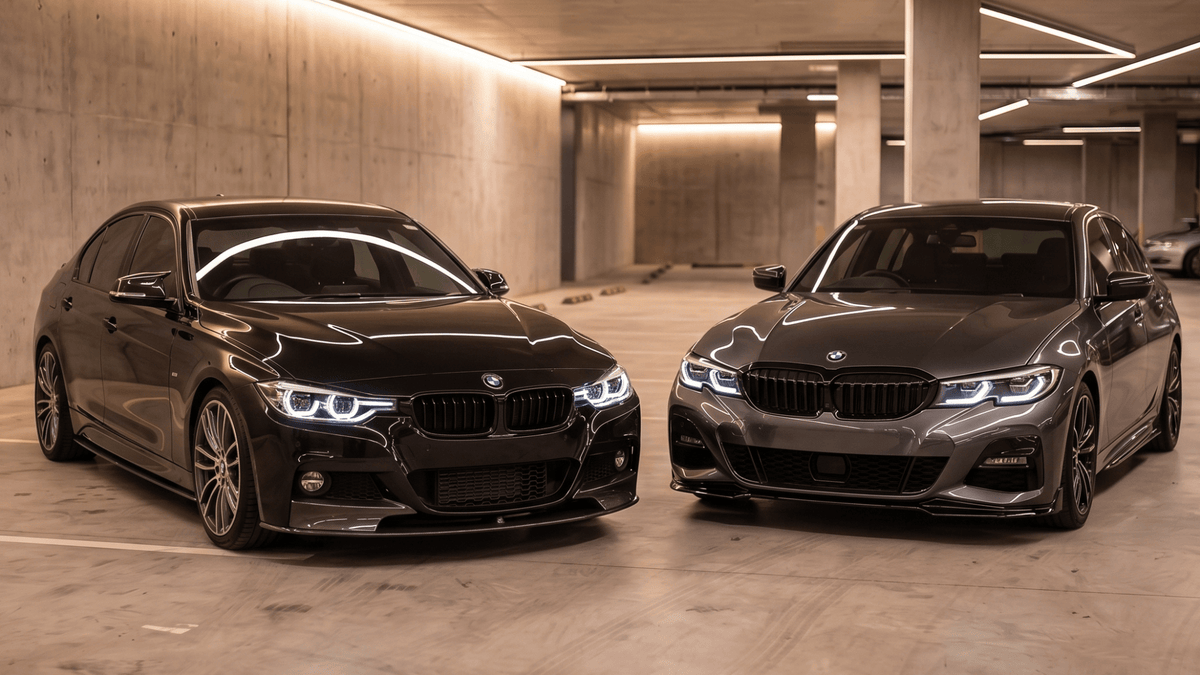
On the F30, the update landed in mid-2015 for the 2016 model year. The easy tell is the daytime running lights: pre-LCI cars run round rings inside the headlight, while LCI cars run flat angular strips with full LED units. Tail lights changed too.
On the G20, the facelift reached Australian showrooms in the last quarter of 2022. Slimmer headlights, a reshaped grille surround and a redesigned front bumper. If you’re shopping for a g20 front lip, this is the split that decides which one bolts up.
Check Your Trim Level, Then Check It Again

Within a single generation, BMW sold Sport Line, Luxury Line and M Sport. The M Sport package brings its own front and rear bumpers with a different intake shape.
An F30 M sport bumper and a standard F30 bumper are not the same panel. A lip cut for one will sit proud, gap badly or refuse to mount on the other.
If you aren’t sure which you have, look at the lower front bumper: M Sport cars run wider, more angular corner intakes and usually a black valance strip.
Body Kits Compatible with BMW 3 Series for the F30 (2012 to 2019)
The F30 is the sweet spot for modifying right now. Prices have settled, the aftermarket is mature and a clean body kit compatible with BMW F30 turns a very common sedan into something worth a second look.

Most owners start with an F30 front lip, then add side skirts and a boot spoiler once the front end sets the tone.
Stick to parts listed for your bumper type and your LCI status and the job is a weekend with a socket set. Ignore those two things and it’s a weekend with a heat gun and regret.
Body Kits Compatible with BMW 3 Series for the G20 (2019 to Now)
The G20 responds well to restraint. The factory lines are already sharp, so a body kit compatible with BMW G20 works best as an OEM+ build: a front splitter, side skirt extensions and a subtle rear diffuser rather than a full costume change.
Just remember the 2022 split. Pre-LCI and LCI front bumpers are different, so parts are listed separately.
Browse the G20/G21 body kits and match yours to the build date you pulled off the door jamb.
Does a 320i or 340i Change Which Body Kit Fits?
Not on its own. The engine badge tells you what is under the bonnet, not what shape the bumper is.
A body kit compatible with BMW 320i and a 340i kit are the same parts if both cars are the same generation with the same bumper. What actually changes is the trim level that tends to come with each badge. Australian 340i buyers almost always got the M Sport package as standard, while 320i buyers often ran Sport Line or Luxury Line unless they ticked the box.
So a 320i M Sport takes M Sport parts. A 340i is very likely an M Sport too. Confirm the bumper rather than assuming from the badge, and note that the 340i name only ever applied to the F30. The six-cylinder G20 wears an M340i badge and a different bumper again.
What Actually Fits: Fitment Rules That Save You Money
Universal means it fits nothing properly. A one-size-fits-all lip needs trimming, heating and filler before it sits anywhere near flush, and the gaps still give it away in the Woolies car park.
Model-specific parts are 3D-scanned for one chassis and one bumper, so they bolt straight up. Have these five answers ready before you order:
-
Build month and year from the compliance plate
-
Chassis code (F30, G20, F31, G21 and so on)
-
Body style: sedan or Touring
-
Pre-LCI or LCI
-
M Sport or standard bumper
Get those five right and fitment stops being a gamble. Our whole body kit range compatible with BMW 3 Series is listed by generation and bumper type for exactly this reason, and every advertised part is covered by our Fitment Guaranteed promise.
Are Body Kits Compatible with BMW 3 Series Legal in Australia?
Yes, body kits are legal here as long as the modification meets the National Code of Practice (VSB 14) and your state or territory's rules.
Ground clearance is the usual sticking point. An aggressive front splitter on an already low M Sport can drop you under the minimum, and each state applies the national code a little differently. Measure your clearance and confirm the current requirements with your local transport authority before you buy.
Body Kit Compatible with BMW 3 Series FAQs
Which BMW 3 Series generation do I have?
Check the build date on the compliance plate in your driver's door jamb, then match it to the generation: E90 for 2005 to 2013, F30 for 2012 to 2019 and G20 for 2019 onwards. If the plate is unclear, enter the last seven characters of your VIN into a BMW parts catalogue like RealOEM to get the build date and chassis code.
Will an F30 body kit fit a G20?
No. The F30 and G20 are different generations with completely different bumper shapes and mounting points. Parts are cut for one chassis only, so an F30 lip will not mount on a G20 regardless of trim level.
Do I need an M Sport bumper for a body kit compatible with BMW 3 Series?
Not always, but you do need to know which bumper you have. Most F30 and G20 kits are listed separately for M Sport and standard bumpers because the lower intake shapes differ. Buying the wrong version leaves gaps that no amount of adjustment will close.
Is a 320i body kit different from a 340i body kit?
The parts are the same when both cars share a generation and bumper type. The 340i was usually sold in Australia with the M Sport package, so it takes M Sport parts, while a 320i may have Sport Line or Luxury Line bumpers. Confirm the bumper, not the badge.
Can I fit a body kit compatible with BMW 3 Series myself?
Bolt-on parts like a front lip, side skirt extensions or a boot spoiler are realistic home jobs with hand tools, patience and a clean space to work. Full kits, anything needing paint matching and any part that mounts near the crash structure are better handled by a shop.
How much does a body kit compatible with BMW 3 Series cost in Australia?
A single front lip typically starts at a few hundred dollars, while a matched front, side and rear package runs into four figures before paint and fitting. Material and finish move the number most, with genuine carbon fibre sitting at the top of the range.
Get the Right Parts for Your 3 Series the First Time

Pull the build date, note the bumper type, then shop. Two minutes at the door jamb saves you a return, a repaint or a lip that never sat right.
We stock model-specific parts for the E90, F30 and G20 from our Sydney warehouse, with Australia-wide shipping and optional professional installation if you would rather someone else spent Saturday on their back.
Browse the body kit range compatible with BMW 3 Series or text our crew your build date and we will tell you exactly what fits.